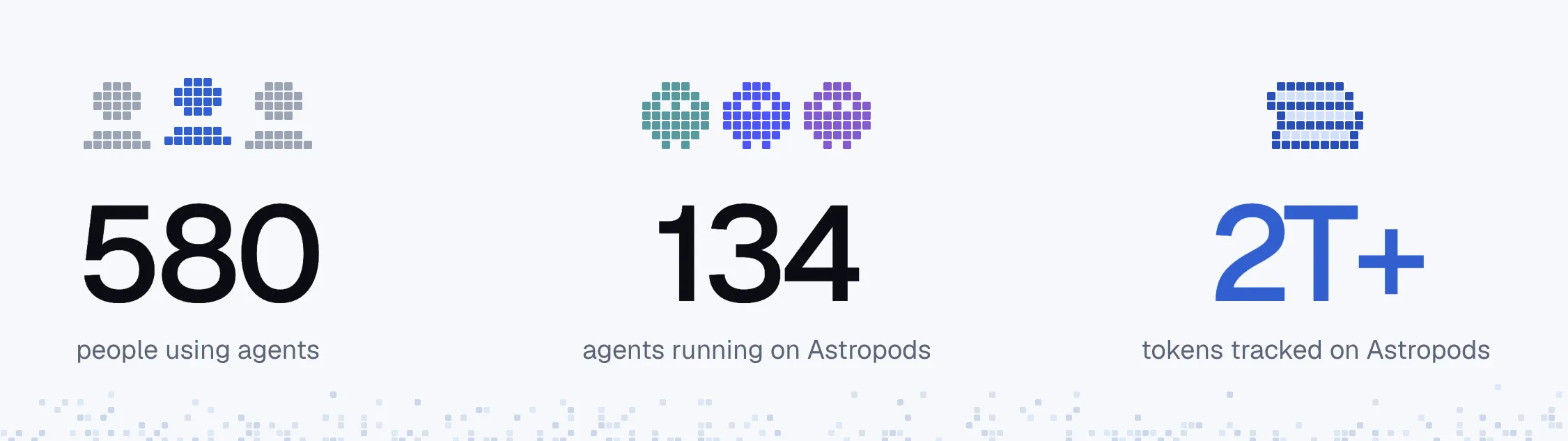
We’re quickly approaching a world where most teams run more agents than people can manage. At Postman, where Astropods was incubated, this is already true. In the last three months, 580 people across the company used 134 agents on Astropods. One GTM agent alone, Coach, was used by more than 200 people.
Right now, each agent still needs a person behind it. Someone has to find its failures, fix them, improve it, keep its cost down, and keep it healthy. Now imagine doing that for 50, 100, or 1,000 agents. That work doesn’t scale.
Gone are the days when model intelligence was the limit. Now the limit is how many agents a person can oversee, and how quickly people can unblock them.
From reactive to proactive
Most teams find out that an agent failed when a user complains, or when someone digs through traces by hand. Then a person reads the conversation, guesses the cause, changes a prompt or tool, and hopes the change doesn’t break something else.
To make this sustainable, we have to move from a reactive loop to a proactive one. Proactive means the work starts before anyone complains. Agents spot a problem or a chance to improve, do the work, then bring a person the result with the proof in hand.
Astropods can get an agent into production quickly, but what keeps it working is the work after launch. We believe that work can’t remain manual.
The good news is that this work suits agents. Reading thousands of traces to find the one pattern that matters is tedious for a person and easy for an agent. Give each agent a single job, and it gets even better at it.
That’s where pods come in.
Pods: agents for agents
A pod is a group of agents working toward a shared goal. Each agent in it has its own role. The agents check each other’s work, so a person only steps in when there’s a decision to make.
People are part of the pod too. Over time, their feedback makes the pod better, so it needs them less and less.
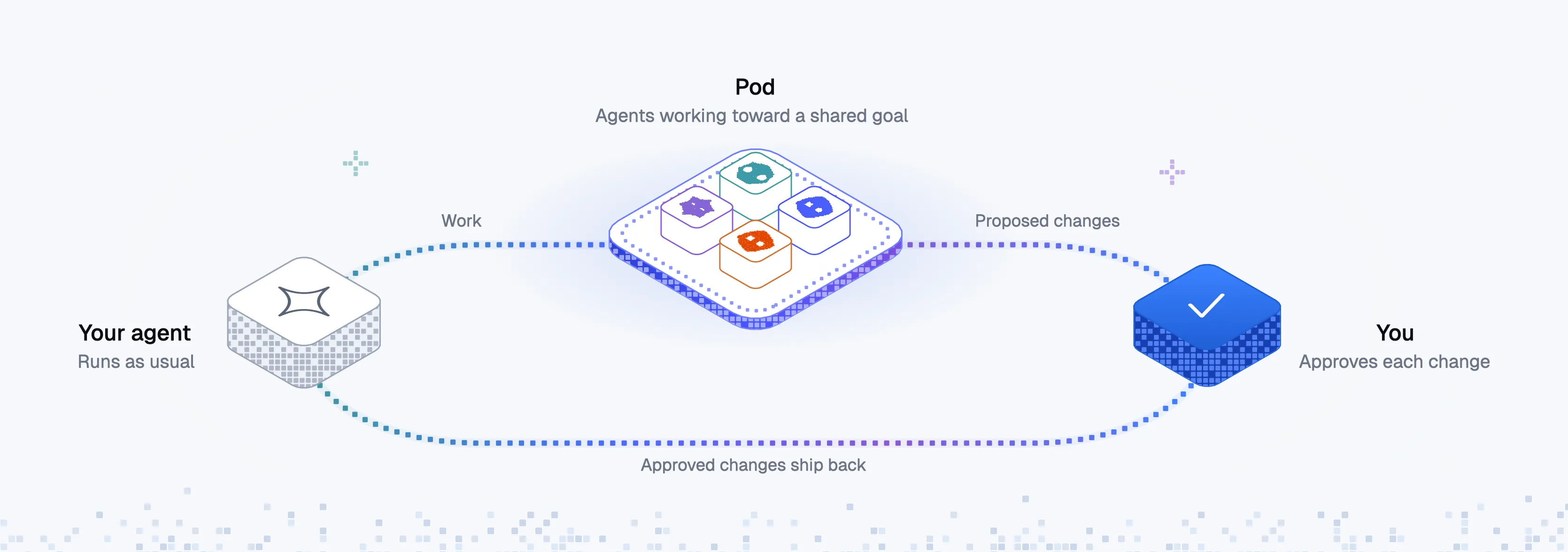
At Postman, we rely on pods every day. Each pod is a set of agents running on Astropods, where people and agents see the same telemetry. Two key examples are the Ship Pod, which builds and ships code for a project, and the Quality Pod, which finds where an agent goes wrong and drafts the fix for a person to approve.
The Ship Pod
Each agent in the Ship Pod has a specific role, and together they plan, build, review, and ship pull requests for a project. In the last couple months, it has completed more than 5,000 agent runs and shipped more than 400 pull requests, each one a task a person would otherwise have built by hand.
With that much output, the slow part is no longer the agents. A typical merged pull request spends about 2 hours with the pod while it builds, tests, and reviews its own work. Then it waits around 13 hours for a person to merge it. That’s nearly 80% of its time spent waiting on people, even though most of those pull requests merge without anyone asking for a change.
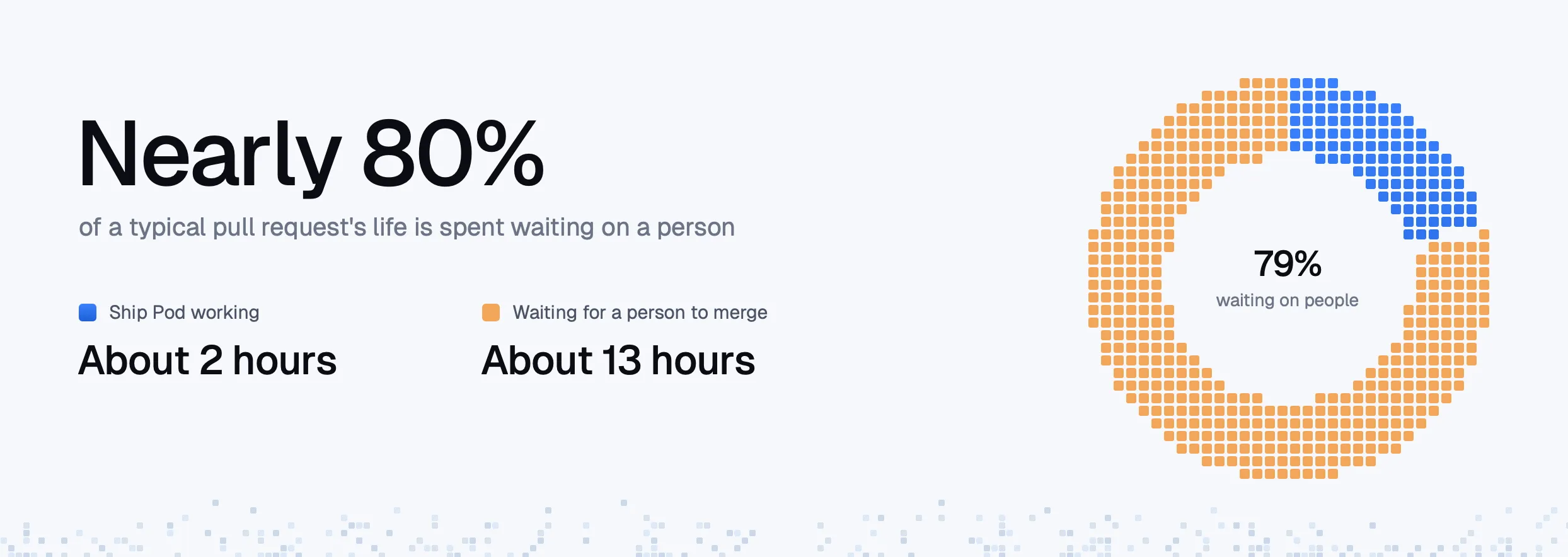
The agents are ready, and the work waits on people. To go faster, people have to trust agents with more of the work. That trust grows as agents get things right more often, because they learn from people’s feedback. Helping them get it right is the job of the Quality Pod.
The Quality Pod
The Quality Pod has four members.
- Triage reads every trace and groups failures into patterns, each with a likely cause.
- Fixer drafts a prompt or tool change for a pattern and replays it on the traces that failed.
- Test Writer turns each confirmed failure into a test case.
- Watcher checks that a fixed failure stays fixed.
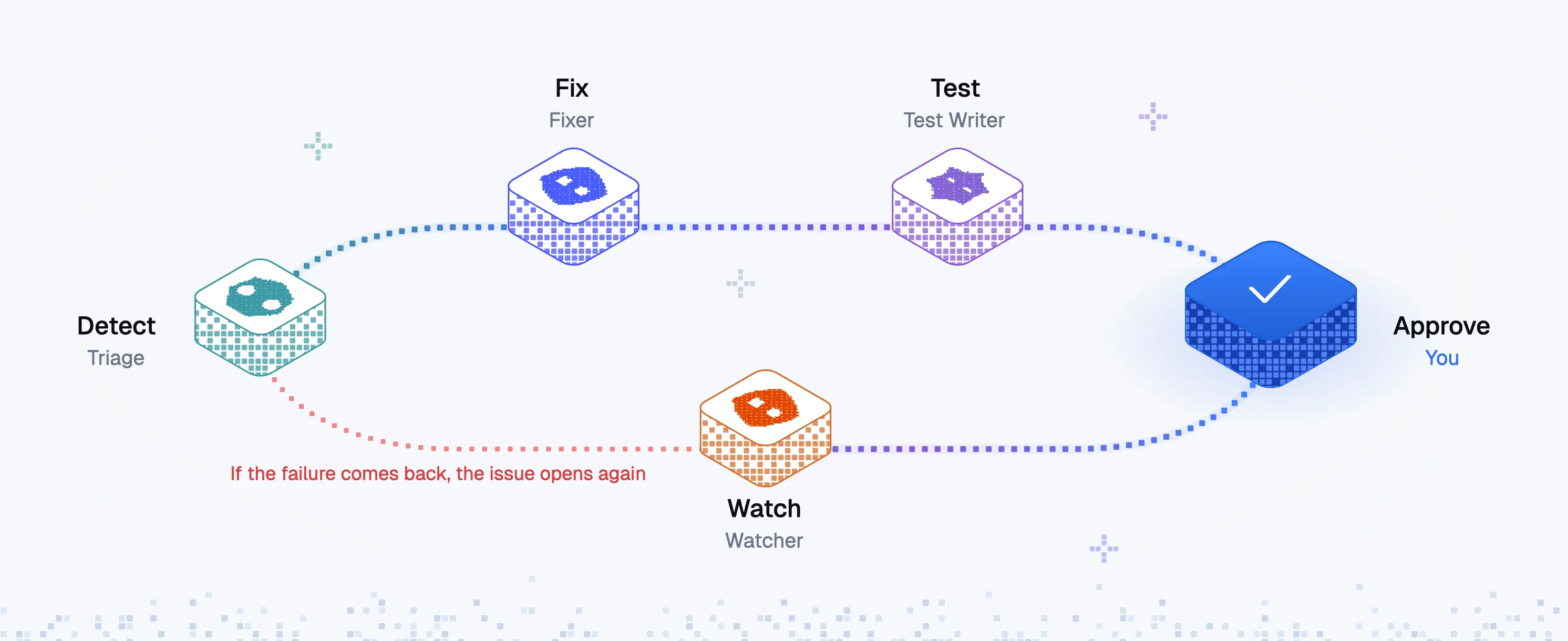
For example, say a support agent keeps quoting an old refund window. Triage spots the pattern and finds the cause: the agent’s instructions still say 30 days. Fixer drafts a one-line change and replays it on bad and good conversations. Test Writer saves the case as a test. A person sees the cause, the change, and the proof, and approves the fix. If the failure comes back, Watcher opens the issue again.
The pod does the digging, and the person makes the call. They come in at the end of the loop, not the start, so they review a result instead of a guess.
At Astropods, we run the Quality Pod on our own agents. Every failure it catches and every fix it gets right builds the trust we need to hand agents more of the work.
Other pod examples
The same pattern fits other work around agents. Here are a few pods we’re developing.
- Cost Optimizer Pod tries cheaper models and keeps the ones that hold quality.
- Health Pod watches latency, errors, and capacity.
- Network Security Pod watches an agent’s traffic and flags calls it shouldn’t make.
- Vulnerability Pod scans an agent’s image and dependencies for known security issues.
- API Pod watches the APIs an agent calls and catches breaking changes before the agent fails.
Trust is earned one fix at a time
Each time a pod’s fix gets approved and holds up, the pod builds a track record. The longer that record gets, the more work the pod can be trusted with.
The goal isn’t to remove people. It’s to move them up to where their judgment matters most.
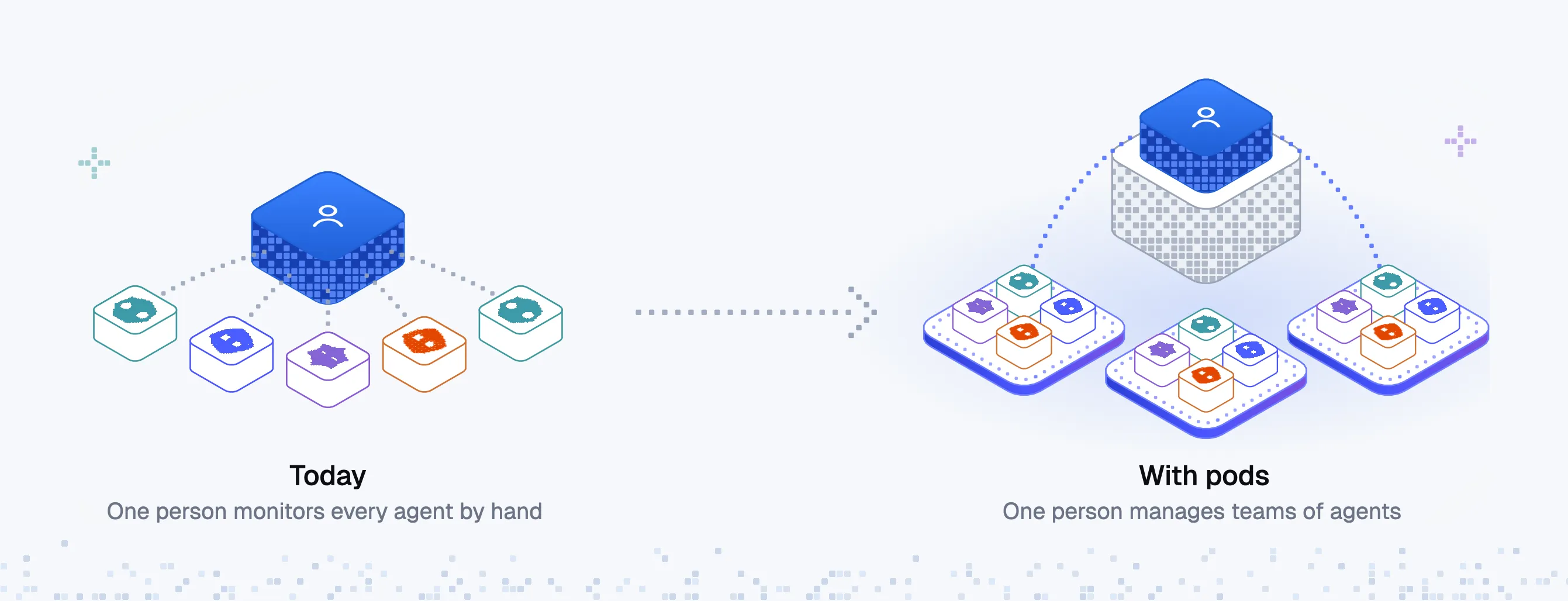
With pods, the number of agents a team can run no longer depends on how many people it has to watch them.
Soon, every agent a team runs will have a pod next to it. Pods will take on more of the work on their own, from low-risk fixes to cost and health. People will set the goals and make the calls that matter. That’s the future we’re building at Astropods.
The companies furthest ahead with agents have already hit the limit of one person per agent. The ones that haven’t will hit it soon, and the ones that solve it first will be miles ahead of everyone else.
The teams that win with agents won’t be the ones that run the most. They’ll be the ones whose agents get better every day.
Is anyone looking after your agents?
If your agents still need a person behind each one, Astropods can help you catch up and rethink how your business runs with agents. Talk to us.